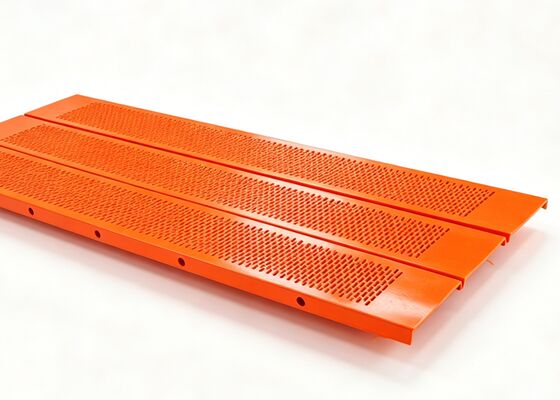
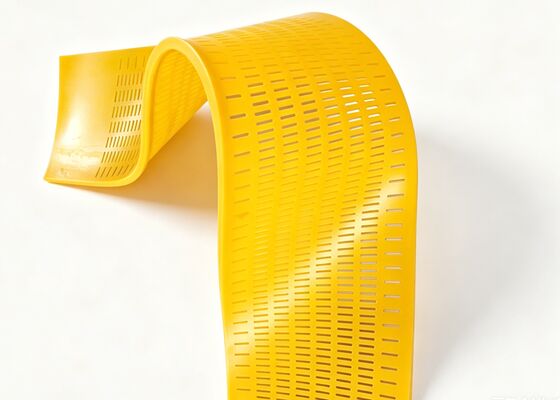
Microbe Resistant TPU Flip Flow Screen Mesh for Professional Compost Recycling
Product Overview
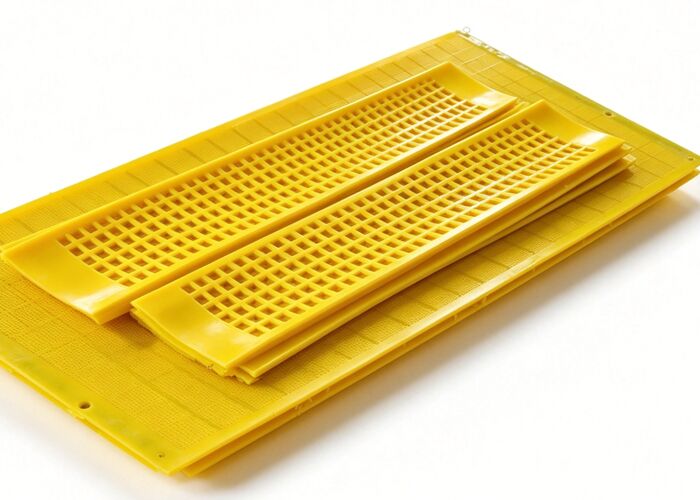
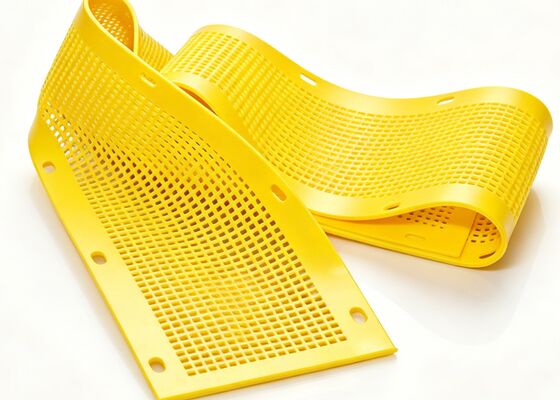
The processing of organic compost and biomass presents a unique challenge: the biological activity of bacteria and fungi can rapidly degrade standard elastomers. These flip flow screen mats are manufactured from professional-grade TPU (thermoplastic polyurethane) specifically formulated with microbe-resistant properties. This chemical stability ensures the mats maintain their elasticity, tensile strength, and dimensional precision even when processing materials with moisture levels as high as 40-50% in industrial composting facilities. TPU elastomers are also chosen for their exceptional tear strength (up to 100 kN/m), which is necessary to withstand the impact of inhomogeneous construction and demolition (C&D) waste.
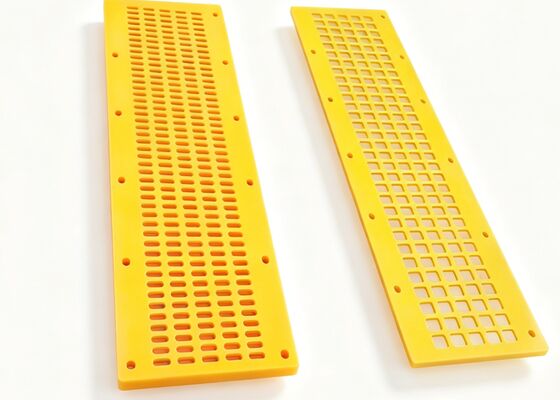
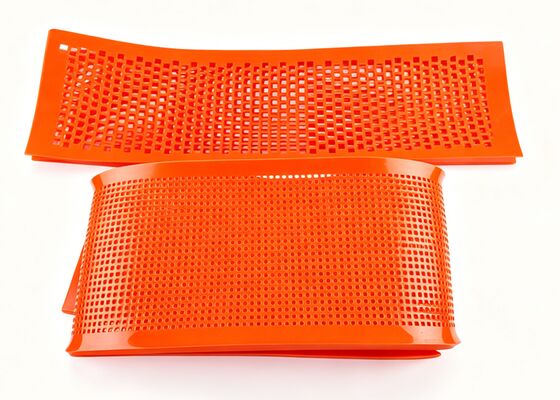
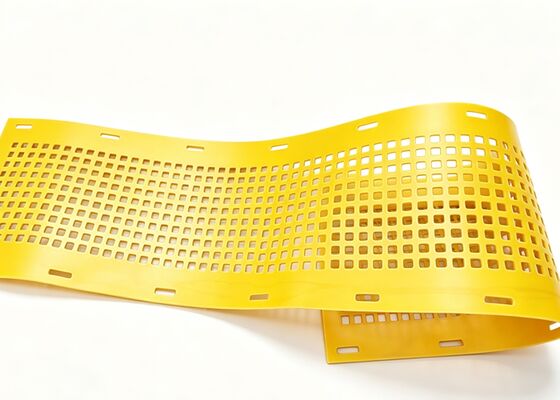
The screen mesh operates at a high frequency of 16 Hz, transferring an acceleration of 50g directly to the material bed. This "trampoline effect" prevents fibrous and "stalky" organic matter from matting and clogging the apertures. Specialized hole shapes, such as boomerang or peanut designs, are precision-molded into the TPU mats. These apertures are designed to stretch and relax dynamically with the mat, ensuring that wedged fragments are forcibly ejected during the contraction phase. This secondary vibration effect provides the cleanest possible end-product, achieving a separation accuracy of 98%. Available for both bolting and clamping installations, these lightweight modules reduce the dynamic load on the vibrating machine while providing a service life more than 5 times that of rubber alternatives in organic waste streams.
Connection Type
Key Features
- Manufactured from highly resilient polyurethane elastomer
- Flip flow mats with joints maintain elasticity and dimensional accuracy
- Designed for both bolting and clamping systems
- Compatible with all screen decks worldwide regardless of machine brand
- Universal fit for various deck dimensions and installation characteristics
Our team
Huatao Group is a leading innovative mineral equipment solutions provider, dedicated to improving operational efficiency and productivity in the mining and mineral processing industries. We are always committed to providing high quality and customer satisfaction, and are committed to becoming a trusted partner for companies.

HUATAO GROUP boasts a specialized team dedicated to developing mineral equipments and parts. Our primary business encompasses vibrating screens, polyurethane screen, rubber screen panels, mineral crushers, beneficiation machinery and other mineral equipment parts. Furthermore, we specialize in custom engineering, precision manufacturing, quality assurance, after-sales support and continuous innovation. Our products are renowned for their durability, efficiency, and reliability. We also offer equipment installations, operational training, and a wide range of spare parts to ensure our clients' operations run smoothly. With advanced technology and a focus on sustainability, HUATAO GROUP stands as a leading player in the mineral processing industry. If you are looking for polyurethane screen panels manufacturers, please contact us for more information!
RFQ
Q: What essential material information must I provide when submitting a Flip Flow Screen RFQ?
A: To ensure accurate equipment selection and sizing, the following data is required:
1. Material Name (e.g., Coal, Iron Ore, Municipal Waste, or Compost).
2. Maximum Feed Dimension and approximate feed size analysis.
3. External Moisture Content (%) and whether the material is sticky or fibrous.
4. Bulk Density of the material.
5. Required Separation Sizes (cut points).
6. Desired Processing Capacity in tons per hour (t/h).
Q: Why is a Flip Flow Screen superior to a Linear Vibrating Screen for damp or sticky materials?
A: Standard linear screens often fail due to "blinding," where moisture creates a film that covers screen holes. Flip Flow screens use a dual-mass vibration principle to alternately stretch and relax elastic polyurethane mats. This motion creates a 50g projectile acceleration that breaks the adhesive bonds of moisture films and dislodges near-size particles, fundamentally preventing clogging.
Q: How do I choose between MDI and TDI polyurethane for my screening mats?
A: Selection depends on your specific application and environment:
- Prioritize MDI for high-wear, high-impact tasks (e.g., iron ore, aggregates) or operations in harsh chemical (acidic/alkaline) and wet environments. MDI offers superior durability and a service life 1.5 to 3 times longer than TDI.
- Consider TDI if you need high elasticity to protect fragile or brittle materials (e.g., agricultural grains) or if operating in extreme cold down to -40°C.
Q: What is the maintenance intensity for these screen mats, and is the replacement process difficult?
A: Polyurethane mats are designed for low maintenance due to their self-cleaning properties. Modern designs utilize boltless fastening systems (such as snap-fit interference wedges or PU connectors), which create an absolutely smooth surface to prevent material buildup. These systems allow for very rapid replacement, enabling one operator to change ten square meters of screen surface in just one working hour
Q: Why Flip Flow instead of Linear Screens?
A: Flip Flow screens generate 50g acceleration which breaks surface tension and breaks up caked material, preventing blinding and pegging in materials with up to 50% moisture.
Q: MDI vs. TDI: Which should I choose?
A: Use MDI for heavy-duty, high-wear mining (ores/aggregates) as it lasts 1.5–3x longer. Use TDI for agriculture or extreme cold (down to -40°C) where flexibility is priority.
Q: How long does it take to replace screen mats?
A: Using boltless fastening systems, a single operator can replace 10 square meters of screen surface in just one hour.
Q: Can I customize the aperture shape?
A: Yes. Options include square, round, oblong, and specialized boomerang or peanut shapes designed to eject wedged particles


 Your message must be between 20-3,000 characters!