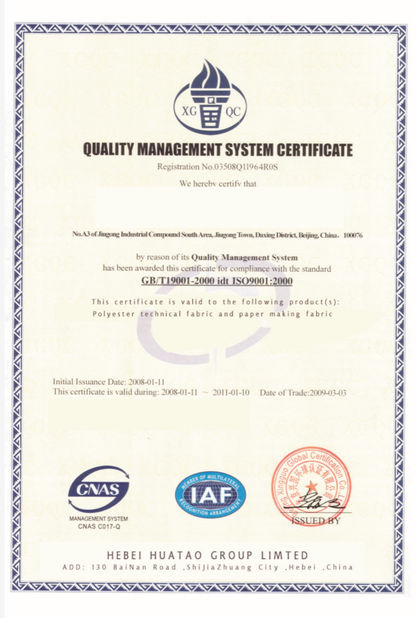
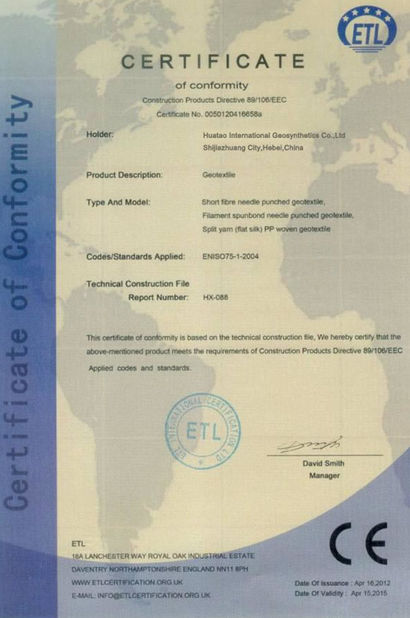
HUATAO export flotation rotor and stator assemblies globally, serving copper, gold, iron ore, and lithium flotation circuits in South America, Africa, Australia, and Central Asia. Qualified suppliers offer custom materials (polyurethane, rubber, composite), OEM-compatible designs, and 30–50% cost savings compared to traditional OEMs, with typical service life of 6–18 months.
Key Takeaways for B2B Buyers
✔ Global sourcing is mature – Chinese flotation wear parts are already operating successfully on four continents.
✔ Cost savings are real – 30–50% lower procurement cost without sacrificing recovery rate or wear life.
✔ Material selection determines ROI – polyurethane, rubber, composite, and alloy each have clear application boundaries.
✔ Supplier manufacturing capability > low price – in-house molding and CNC machining directly affect quality consistency.
✔ The flotation circuit doesn’t operate in isolation – rotor/stator performance connects directly to hydrocyclone classification and downstream dewatering.
Summary Table: Chinese Flotation Rotor and Stator Exporters
Definition: Flotation Rotor and Stator in Mineral Processing Context
A flotation rotor and stator is a pair of wear parts installed inside a flotation cell. The rotor is a rotating impeller that generates suction and disperses air into fine bubbles. The stator is a stationary ring of vanes surrounding the rotor that converts turbulent flow into a controlled radial flow pattern, maximizing bubble–particle contact.
In the complete mineral processing flow:
-
Upstream: A hydrocyclone classifies ball mill or SAG mill discharge to achieve the correct particle size (typically P80 of 75–150 µm for flotation).
-
Downstream: Flotation concentrate passes to a thickener and then a filter press for dewatering before storage or shipping.
Thus, rotor and stator performance directly affects not only flotation recovery but also the stability of downstream filtration and tailings management.
Working Principle: From Slurry to Concentrate
-
Slurry feed enters the flotation cell from the hydrocyclone overflow.
-
Rotor rotation (typically 150–300 rpm) creates a vacuum that draws air (or forced air from a blower).
-
Air shearing occurs as the rotor tips cut through slurry, producing bubbles 0.5–2 mm in diameter.
-
Stator vanes redirect the mixed slurry–bubble flow upward and outward, reducing turbulence that could detach mineral particles.
-
Hydrophobic particles attach to bubbles and rise to form a froth layer.
-
Froth overflows the cell launder and is pumped to thickeners.


 Your message must be between 20-3,000 characters!