logo
Home
Products
About Us
Factory Tour
Quality Control
Contact Us
Request A Quote
News
HUATAO LOVER LTD
Home News

How Often Should I Replace Hydrocyclone Liners?

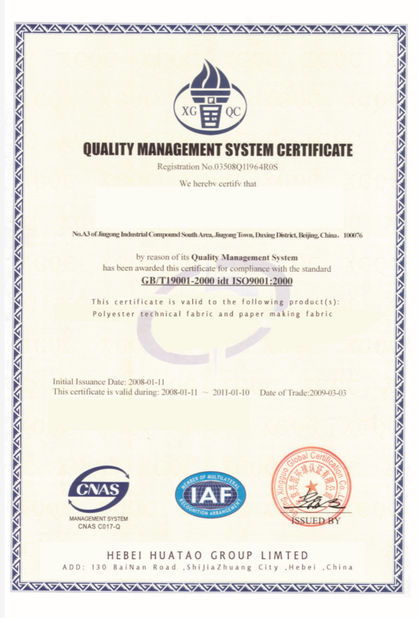
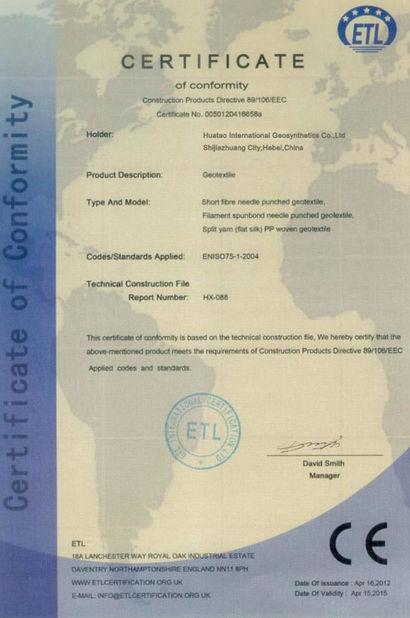
China HUATAO LOVER LTD certification
Huatao company is a very good company , I am very willing to cooperate with you, safe, efficient, professional, honest, happy! Thank you for providing me with stable service and products. -----EUROPAT

—— EUROPT INDUSTRIAL

I'm Online Chat Now
Company News
How Often Should I Replace Hydrocyclone Liners?
Latest company news about How Often Should I Replace Hydrocyclone Liners?

How Often Should I Replace Hydrocyclone Liners?

Quick Answer

There is no single, universal replacement interval for hydrocyclone liners. The frequency depends heavily on the abrasiveness of your ore, feed pressure, and the material of the liner itself. However, published field data and maintenance guidelines provide clear benchmarks: rubber liners typically last 12–24 weeks (3–6 months) , while spigots/apex last 4–8 weeks in abrasive service. The most reliable method is condition-based replacement—measure the apex weekly and replace when the bore enlarges by 3–5 mm or 7–10% of the original size.

Benchmark Replacement Intervals

Rubber Liners

  • Typical Field Data: 12 to 24 weeks (3 to 6 months). A West African gold mine reported competitor liners lasting 12–16 weeks, while CAVEX liners lasted 24 weeks. Another case study noted cone liners every 6 months.

  • Severe Conditions: Can be much shorter. One plant was re-lining cyclones every 2 to 3 weeks before upgrading.

Spigots / Apex (Fastest Wear)

  • Typical Field Data: 4 to 8 weeks is common for spigots in abrasive service. The Montana Resources case extended spigot life to an average of 8 months using a standby strategy.

  • Severe Conditions: As short as 14 to 30 days in highly abrasive ferrochrome slag applications.

Ceramic / Advanced Liners

  • Expected Life: Longer intervals, though specific weeks are less standardized. Premium ceramics in the lower section are used specifically to extend intervals between rebuilds. A tender specification for rubber liners set a minimum wear life of 8,000 hours (approx. 11 months) for a limestone slurry application.

The Practical Rule: Measure, Don't Just Schedule

Because conditions vary so much, the most reliable method is condition-based replacement rather than a fixed calendar schedule.

  • Inspect New Cyclones Frequently: Weir recommends inspecting internally at least every two months until you establish the actual wear rate for your specific ore.

  • Measure the Apex Weekly: The spigot is the fastest-wearing part. Use a bore gauge to measure the internal diameter. Replace it when the bore enlarges by 3–5 mm, or when it exceeds 7–10% of the original size. Waiting until the overflow "runs coarse" is too late; efficiency has already degraded.

  • Replace Liners at 1/3 Thickness: A common industry rule is to replace elastomer liners when they have worn down to less than one-third of their original thickness.

Key Factors That Shorten Life

If your liners are failing faster than the benchmarks above, check these variables:

  • Particle Shape: Sharp, angular, or flat particles cause much higher wear than rounded ones.

  • Feed Pressure: Higher pressure increases velocity and wear rate.

  • Tramp Material: Ball chips or stray metal can gouge liners rapidly.

  • Operating Mode: Running at the "transition state" (maximizing density without roping) is efficient for separation but can accelerate wear compared to a more dilute, stable operation.

Summary

Start by expecting rubber liners to last roughly 3–6 months and spigots 1–2 months in typical abrasive service, but measure weekly to find the actual rate for your plant. Upgrade to ceramic components in the highest-wear zones (apex and lower cone) if you need to extend those intervals significantly.

Pub Time : 2026-10-20 09:50:42 >> News list
Contact Details
HUATAO LOVER LTD

Contact Person: Mr. Maple

Tel: +86 17778255675

Fax: 86--311-80690567

Send your inquiry directly to us (0 / 3000)