logo
Home
Products
About Us
Factory Tour
Quality Control
Contact Us
Request A Quote
News
HUATAO LOVER LTD
Home News

How to Choose a Glue Blender for MDF Production

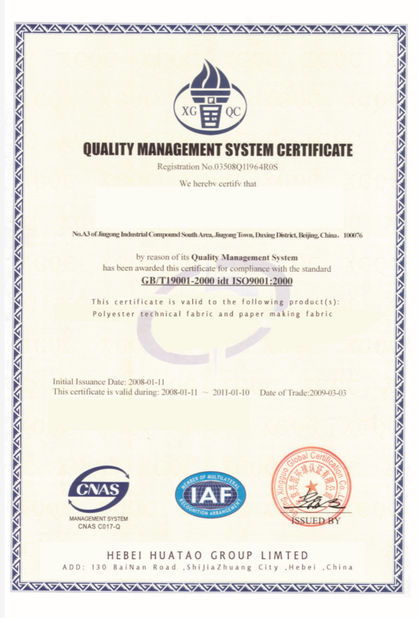
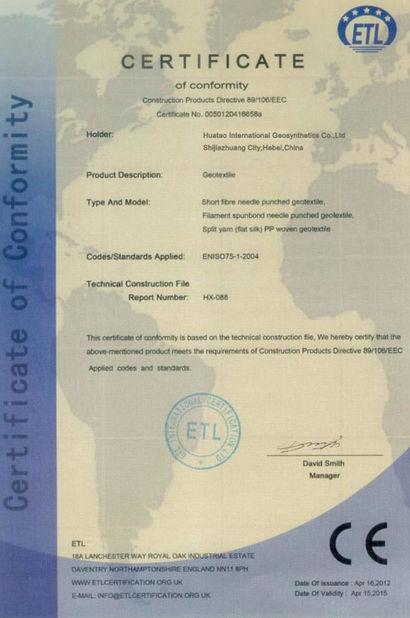
China HUATAO LOVER LTD certification
Huatao company is a very good company , I am very willing to cooperate with you, safe, efficient, professional, honest, happy! Thank you for providing me with stable service and products. -----EUROPAT

—— EUROPT INDUSTRIAL

I'm Online Chat Now
Company News
How to Choose a Glue Blender for MDF Production
Latest company news about How to Choose a Glue Blender for MDF Production

Quick Answer

What Is an MDF Glue Blender? An MDF glue blender is the process unit that uniformly coats dried wood fibers with resin, wax, and additives before mat forming. Choose one by matching rated dry fiber throughput to your line, confirming compatibility with UF, MUF, or pMDI resin, and verifying uniform coverage at low fiber damage, with effective buildup control and wear resistance.

Key Takeaways

  • Capacity matching is the first filter. Rated dry fiber throughput in t/h must include margin for peak line speed; under- and over-sizing both degrade mixing performance.

  • Resin chemistry dictates hardware. UF, MUF, and pMDI require different nozzles, materials, cleaning procedures, and safety measures.

  • Uniform coverage at low fiber damage is the core objective. Adjustable tool speed, controlled retention time, and even atomization deliver it.

  • Buildup control and wear resistance determine uptime. Water-cooled chambers and abrasion-resistant tools are essential for continuous MDF operation.

  • Integration and lifecycle cost decide value. Upstream metering, downstream forming, spare-part availability, and service response matter as much as capital price.

Definition

An MDF glue blender is a mixing unit positioned between fiber drying and mat forming. It combines dried fibers with adhesive, wax, water, and additives, using a rotating shaft with mixing tools and atomizing nozzles inside a chamber. A discharge flap controls retention time, and a cooling system limits temperature rise. The unit's purpose is to deliver a homogeneous resin-fiber mixture without damaging fibers or creating excessive fines.

Working Principle

Dried fibers enter the mixing chamber and are fluidized by rotating tools. Resin, wax, water, and additives are atomized through spray nozzles and deposited onto fiber surfaces. Retention time is governed by the discharge flap and tool configuration, allowing complete coverage without overmixing. A water-cooled chamber, shaft, tools, and discharge flap limit temperature rise, preventing premature resin curing and reducing glue accumulation. The blended furnish discharges to the forming line, where mat moisture and resin distribution must remain consistent before pressing. Upstream, fiber morphology is set by the DRUM CHIPPER and RING FLAKER, while size distribution is controlled by the WOOD CHIPS SCREEN.

Benefits

Uniform resin distribution. Even coverage improves internal bond strength and reduces resin consumption. Stable metering upstream, such as a PARTICLE BELT SCALE FOR WOOD-BASED PANEL PRODUCTION, supports consistent application rates.

Fiber protection. Low-shear rotor design and controlled retention time reduce fines, dust, and surface defects.

Buildup control. Water-cooled chambers, shafts, tools, and discharge flaps limit resin pre-cure and glue accumulation.

Integration. Effective interface with upstream fiber metering and downstream FORMING MACHINE and CONTINUOUS PRESS MACHINE maintains stable production.

Maintenance access. Accessible inspection doors, fast cleaning, and replaceable wear parts reduce downtime.

Applications

  • MDF/HDF production — core and surface fiber blending, including graded MDF with separate zones.

  • Particleboard production — ring glue blender configurations for coarser furnish.

  • OSB production — drum mixers with high-speed atomized spray heads for strand coating.

  • Fiber preparation integration — blending downstream of chipping, flaking, and screening equipment.


    Selection Guide

    Start with throughput. Define rated dry fiber throughput in t/h and add margin for peak line speed. Then specify fiber characteristics: size, moisture, bulk density, species mix, and fines content. Define the resin system, wax percentage, additives, and emission requirements. Require guaranteed resin distribution, fiber-damage limits, and buildup-control performance.

    Review atomization design. Solutions such as the OSB DRUM MIXER & HIGH-SPEED ATOMIZED SPRAY HEAD and SPRAY GUN FOR RING GLUE BLENDER show how nozzle choice affects coverage. For particleboard, the RING GLUE BLENDER FOR PARTICLE BOARD provides a reference configuration.

    Confirm integration with upstream material handling such as the ROTARY DISCHARGING MECHANISM (EXTRACTORS) FOR WOOD-BASED PANEL PRODUCTION and downstream forming and pressing equipment. For graded MDF, evaluate whether dedicated blenders or independently adjustable zones are needed for face and core fibers.

    Procurement Guide

    Required information: board thickness range, density, production rate, quality targets, fiber throughput, moisture range, species mix, fines content, resin system, wax/additives, application rates, emission requirements.

    Drawings needed: plant layout, installation space, inlet and outlet dimensions, utility connection points.

    OEM part numbers: chamber dimensions, motor power, mixing tool part numbers, nozzle part numbers, control system interface.

    Material selection: chamber steel grade, tool material and hardness, coating options, seal and gasket materials.

    MOQ, lead time, packaging, shipping: confirm production schedule, export packaging, and shipping method.

    Inspection standards: dimensional checks, material reports, dynamic balance, leak tests, control system validation.

    Supplier evaluation checklist:

    • Can the supplier manufacture according to drawings?

    • Can the supplier provide material reports?

    • Can the supplier support OEM replacement?

    • Does the supplier have export experience?

    • Can the supplier provide wear-life recommendations?

    Also confirm spare-part availability for upstream equipment, such as CHIPPER SPARE PARTS, and local service support.

    Conclusion

    For a typical MDF line, shortlist vendors that demonstrate uniform resin coverage at low fiber degradation, controlled retention time, water-cooled anti-buildup design, and proven compatibility with your UF/MUF or pMDI system. Match capacity to actual fiber throughput, define resin chemistry before requesting proposals, and compare lifecycle cost rather than purchase price. Explore the full range at HUATAO WOOD-BASED PANEL MACHINERY and technical resources in NEWS & TECHNICAL ARTICLES. For process context, see IMPORTANCE OF WOOD CHIP SCREENING MACHINES IN MDF AND PARTICLE BOARD PRODUCTION.


    Contact Information

    Nancy

    Email: director1@huataogroup.com

    WhatsApp: +86 193 2240 4687


    #MDFProduction #GlueBlender #WoodBasedPanels #PanelMachinery #ResinBlending #ManufacturingEngineering #Fiberboard #Particleboard #IndustrialMachinery #ProcessOptimization #B2BManufacturing #WoodProcessing #SupplierSelection #OEMReplacement #ProductionLine #QualityControl #Procurement #Engineering #HUATAO #WoodPanelIndustry



Pub Time : 2026-11-04 09:18:28 >> News list
Contact Details
HUATAO LOVER LTD

Contact Person: Mr. Maple

Tel: +86 17778255675

Fax: 86--311-80690567

Send your inquiry directly to us (0 / 3000)