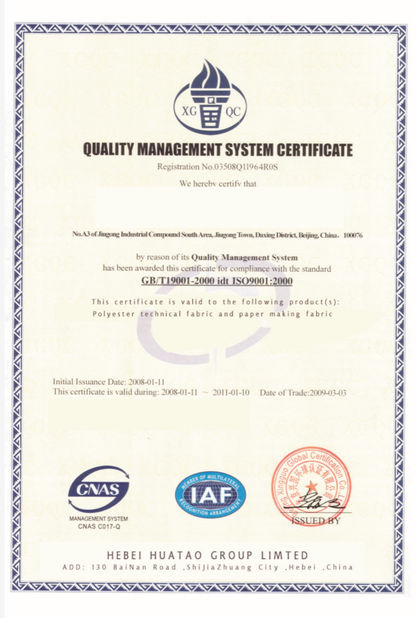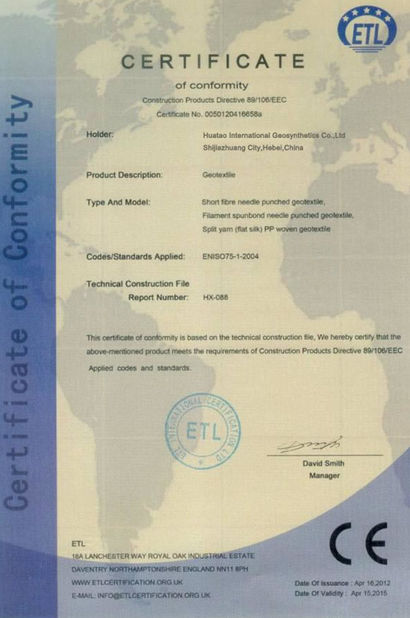
Huatao company is a very good company , I am very willing to cooperate with you, safe, efficient, professional, honest, happy! Thank you for providing me with stable service and products. -----EUROPAT
—— EUROPT INDUSTRIAL
I'm Online Chat Now
Company News
How to Determine the Model of Spiral Blades
The selection of spiral blade models is a highly professional task, which directly affects the conveying efficiency, energy consumption level and service life of equipment. Based on industry selection experience, the model can be determined from the following core dimensions:
1. Confirm Dimensional and Geometric Parameters
This is the foundation of model selection. It is necessary to confirm the outer diameter, inner diameter, pitch and thickness of the spiral blade.
Pitch selection: Common types include full-blade type (the pitch is approximately 0.8 times the spiral diameter) and ribbon type (the pitch is equal to the spiral diameter).
Diameter and conveying capacity: The spiral diameter determines the conveying capacity. It is usually calculated according to the conveying capacity and material characteristics, and then rounded to the standard diameter series (such as 150mm, 200mm, 300mm, etc.).
2. Match Material and Thickness According to Material Characteristics
Working conditions impose different degrees of wear and corrosion on blades, so precise matching is required:
Thickness selection: Thicker blades shall be adopted for conveying granular or highly abrasive materials such as sand, gravel and mineral powder; thinner blades are sufficient for conveying powdery materials such as flour and grains.
Material selection: Q235 carbon steel is applicable for conventional working conditions; 304 or 316L stainless steel shall be used for corrosive or viscous materials (such as sludge and chemical powder); 65Mn spring steel or wear-resistant composite steel plates are suitable for extreme wear working conditions such as mining.
3. Determine Forming Technology
The forming technology determines the overall strength and precision of the blade:
Continuous cold rolling forming: One-time forming without welds, featuring smooth surface and high strength. It is suitable for fields with high hygiene or corrosion resistance requirements such as food, chemical and environmental protection industries.
Sectional welding forming: It is applicable to the manufacture of large-specification and extra-thick plate blades, and is mostly used in extreme wear working conditions of mining, building materials and other industries.
4. Evaluate Operating Environment and Conveying Conditions
Conveying distance and inclination angle: The conveying length of a general screw conveyor is less than 70 meters, and the inclination angle is less than 20 degrees. Double-end drive is recommended when the conveying distance exceeds 35 meters.
Rotational speed and filling coefficient: The rotational speed shall be set according to material characteristics to avoid materials being thrown up due to excessive rotational speed and thus failing to be conveyed effectively. Meanwhile, an appropriate filling coefficient shall be selected based on the fluidity, density and other properties of materials (e.g., 0.45 for fluid grains and 0.15 for loose and highly abrasive materials).
5. Customized Requirements for Special Working Conditions
For complex working conditions, attention shall also be paid to the functional design of blades. For example, scraper-type blades can be used to prevent adhesion when conveying viscous materials; cutting-type blades can be adopted to avoid winding when conveying fibrous materials; tapered or variable-pitch blades can be customized for variable-diameter conveying or precise feeding.