


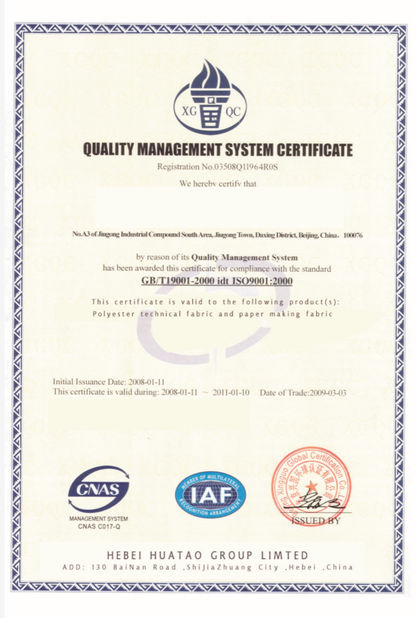
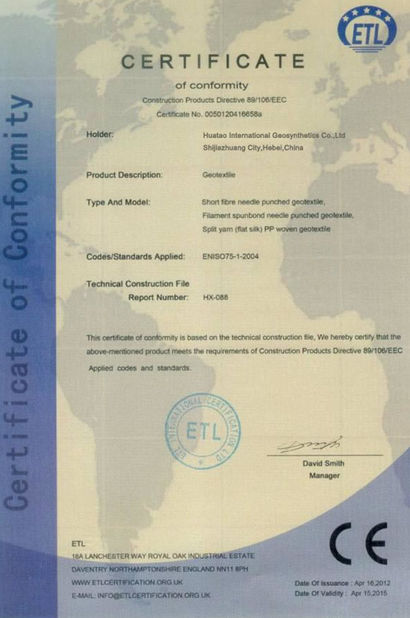
To evaluate a hydrocyclone supplier’s real manufacturing capability for tailings treatment, you must verify ownership of polyurethane casting or ceramic sintering equipment, audit the dimensional accuracy of apex and vortex finder components, request plant case studies specific to tailings dewatering, and compare suppliers on wear life data and spare parts availability. Do not rely on videos or certificates alone.

Key Takeaways
✔ True manufacturers own their moulds and liner production lines; traders only assemble.
✔ Apex and vortex finder diameters are the two most significant operational parameters.
✔ Unstable feed pressure is the number one reason tailings hydrocyclones perform poorly.
✔ Polyurethane liners offer the best balance between cost and service life for most tailings.
✔ Underflow concentration for dry stacking is more important than overflow fineness.
✔ Always verify in-house production of polyurethane or ceramic components when sourcing from China.
Summary Table
| Item | Description |
|---|---|
| Equipment | Hydrocyclone |
| Function | Tailings Dewatering & Classification |
| Target Cut Size | 10–300 µm (depending on tailings type) |
| Critical Components | Apex, Vortex Finder, Cyclone Liner |
| Recommended Liner Material | Polyurethane (best balance for tailings), Ceramic (extreme wear) |
| Key Verification Point | In-house ownership of polyurethane casting or ceramic sintering equipment |
| Supplier Red Flag | Cannot provide plant case studies for similar tailings |
What Is a Hydrocyclone for Tailings Treatment?
A hydrocyclone is a passive classification device that uses centrifugal force to separate solid particles from liquid in a slurry stream. For tailings treatment, the hydrocyclone splits the feed into:
-
Underflow (coarse fraction): Fast-settling solids suitable for wall construction, dry stacking, or further dewatering.
-
Overflow (fine fraction): Fine solids and water that report to a tailings storage facility or thickener.
Hydrocyclones are widely used in tailings management for gold, copper, iron ore, lithium, and coal processing plants.
Working Principle
The hydrocyclone operates without moving parts. Here is how it works:
Step 1: Slurry enters the cyclone tangentially under pressure through the inlet.
Step 2: A high-speed vortex develops inside the cyclone body.
Step 3: Coarse and dense particles move toward the outer wall and travel downward.
Step 4: Fine and light particles move toward the central vortex.
Step 5: Fine particles exit through the overflow (vortex finder).
Step 6: Coarse particles exit through the underflow (apex).
The efficiency of this separation depends on:
-
Cyclone diameter
-
Cone angle
-
Feed pressure
-
Slurry density and viscosity
-
Apex size
-
Vortex finder design and insertion depth
-
Internal liner wear condition
Benefits of Using Hydrocyclones for Tailings Treatment
| Benefit | Description |
|---|---|
| Low operating cost | No moving parts, minimal energy consumption |
| High capacity | Single units can handle hundreds of cubic meters per hour |
| Small footprint | Requires minimal plant space compared to thickeners or classifiers |
| Adjustable cut size | Cut size can be modified by changing apex, vortex finder, or feed pressure |
| Low maintenance | Only wear liners require periodic replacement |
| Dewatering capability | Produces a high-density underflow suitable for dry stacking |
| Wide material compatibility | Handles tailings from most ore types |
Applications in Tailings Treatment
| Application | Description |
|---|---|
| Dry stacking | Produces high-density underflow for conveyor or truck transport |
| Dam wall construction | Coarse underflow used for building tailings storage facility walls |
| Water recovery | Overflow returns water to the plant, reducing fresh water demand |
| Desliming | Removes fine clay particles from coarse tailings |
| Classification ahead of filtration | Improves filter press performance by removing oversized particles |
| Beach grading | Controls particle size distribution on the tailings beach |
Hydrocyclones are effective for dewatering tailings because they split the stream into a coarse, fast-settling underflow for wall construction and a fine overflow for the basin.
How to Evaluate a Hydrocyclone Supplier’s Real Manufacturing Capability
How do I verify if a supplier truly owns its hydrocyclone moulds and liner production line?
To verify true manufacturing ownership, move beyond marketing brochures and generic certificates.
Action steps:
-
Request real-time factory floor photos or a video call showing polyurethane casting lines, ceramic kilns, or mould storage areas. A genuine manufacturer will have moulds bearing their own engraving or serial numbers.
-
Ask for equipment purchase invoices or utility bills for key machinery such as high-temperature casting machines or CNC lathes.
-
Conduct a physical or virtual factory audit focusing on the liner production department. Look for raw material storage (polyurethane prepolymers, ceramic powders) and finished goods.
-
Check lead times for replacement apex and vortex finder. A true manufacturer delivers standard sizes within days; a trader needs weeks.
The particle size distribution of the feed directly determines dewatering behavior; coarse fractions can be pumped at high solids contents, while fine fractions become rigid and stackable. This performance depends entirely on precision-manufactured internal components.
Can I trust a supplier’s separation efficiency video or material certificates?
Videos and certificates are helpful as an initial filter, but they are not sufficient for a final purchasing decision.
Validation steps:
-
Ask for the raw, unedited video file with timestamps and contextual plant background. Generic looped animations prove nothing.
-
Request material certificates from an independent, accredited lab (e.g., SGS, Bureau Veritas), not the supplier’s own test report.
-
Cross-check the certificate number with the issuing lab if possible.
-
Ask for a reference plant where the same hydrocyclone model is operating on similar tailings, then call that plant directly.
What should I inspect during a hydrocyclone factory audit?
A well-planned factory audit is your single best tool to separate real manufacturers from traders.
| Inspection Area | What to Look For |
|---|---|
| Mould and tooling condition | Precision-machined moulds without visible wear. Does the supplier maintain moulds in-house? |
| Liner material consistency | Polyurethane: no bubbles, soft spots, or uneven color. Ceramic: no cracks, porosity, or inconsistent glaze. |
| Apex and vortex finder dimensions | Measure critical diameters with a caliper. Deviations beyond ±0.5 mm will alter cut size. |
| Assembly fit-up | Test-fit an apex, vortex finder, and liner into a cyclone body. Poor fit causes bypass and short-circuiting. |
Apex and vortex finder diameters are the two most significant operational parameters for controlling cut size and recovery when treating fine tailings. If a supplier cannot manufacture these to precise tolerances, your separation performance will suffer.
How can I compare two suppliers with similar hydrocyclone drawings and cut size claims?
When two suppliers present nearly identical drawings and performance curves, dig deeper into these differentiators:
| Comparison Factor | What to Ask |
|---|---|
| Wear life data | Request real plant wear records—hours to first replacement, not theoretical estimates. |
| Spare parts availability | Ask for a price and lead time list for apexes, vortex finders, and liners. Stocked parts matter more than low initial price. |
| Engineering support | Will they help troubleshoot roping, low underflow density, or pressure instability after sale? |
| Customization capability | Can they modify cone angle, apex design, or liner material for your specific tailings? |
| Batch traceability | Does each liner have a date stamp and material batch code for quality tracking? |
Reducing the vortex finder diameter forces more fine material to report to the underflow, which decreases product grade but increases overall solids recovery. This adjustment only works reliably when the vortex finder is dimensionally perfect.
The optimum hydrocyclone for tailings treatment is not necessarily the one with the finest cut, but the one that produces an underflow particle distribution specifically tailored to the requirements of downstream dewatering or deposition equipment.
Material Comparison: Polyurethane vs Ceramic vs Rubber
| Factor | Polyurethane | Ceramic | Rubber |
|---|---|---|---|
| Wear resistance | High | Extremely High | Moderate |
| Impact resistance | Excellent | Moderate | Excellent |
| Weight | Light | Heavy | Light |
| Installation | Easy | Complex | Easy |
| Cost | Moderate | High | Low |
| Service life | 6–18 months | 18–36 months | 3–9 months |
| Best application | General tailings | Highly abrasive ore | Low abrasion, high impact |
For most tailings applications, polyurethane offers the best balance between cost, wear life, and ease of replacement.