What Is the Difference Between Polyurethane and Rubber Flotation Rotors?
The main difference is the behavior of the two materials under working conditions.
Polyurethane is generally harder and more resistant to abrasive wear. This makes it attractive for flotation cells handling fine but highly abrasive mineral slurry. It can also maintain its shape relatively well during long-term operation.
Rubber is softer and more flexible. Instead of focusing mainly on abrasion resistance, rubber provides good resilience and can absorb mechanical impact effectively. This can be useful when the feed contains larger or harder particles that repeatedly strike the rotor.
The construction of the rotor also matters. Material alone does not determine performance. Rotor diameter, blade geometry, balance, bonding quality, dimensional accuracy, and rotor-stator clearance all influence the final result.
For this reason, a good supplier should not simply ask, "Do you need polyurethane or rubber?" They should first understand the flotation cell, slurry characteristics, feed size, operating speed, and expected wear conditions.
How Do Polyurethane and Rubber Rotors Perform in Abrasive Slurry?
Abrasive slurry is one of the biggest challenges for flotation equipment.
When the slurry contains hard mineral particles, the rotor surface is continuously exposed to wear. Once the rotor blades become thinner or lose their original profile, the hydrodynamic performance of the flotation cell can gradually change.
This is where polyurethane has an important advantage.
Polyurethane flotation rotors generally offer higher abrasion resistance than conventional rubber rotors, particularly in applications where abrasive wear is the dominant failure mechanism. Their dimensional stability can also help maintain the intended rotor-stator relationship for a longer period.
Rubber, on the other hand, has better flexibility and impact absorption. If coarse particles create repeated mechanical impacts, a flexible rubber component may be more forgiving.
In practice, the decision should consider:
-
Slurry abrasiveness
-
Particle size and density
-
Mineral hardness
-
pH and chemical environment
-
Flotation reagents
-
Rotor speed
-
Cell design
-
Operating temperature
-
Expected maintenance interval
There is no universal material that is best for every flotation circuit.
Which Flotation Rotor Offers Better Wear Resistance and Service Life?
If abrasion is the primary reason for rotor failure, polyurethane will usually be the stronger candidate.
For copper, gold, iron, and other abrasive mineral processing applications, longer wear life can reduce the frequency of rotor replacement. This is particularly valuable for concentrators where maintenance requires equipment shutdown and labor.
However, comparing service life only by the number of operating hours can be misleading.
A rotor that lasts longer but has poor dimensional accuracy may not deliver the expected flotation performance. Similarly, an inexpensive rubber rotor may be a sensible choice if replacement is quick and the operating conditions are relatively mild.
This is why HUATAO focuses not only on the material itself but also on the manufacturing of mining wear parts.
For polyurethane components, factors such as raw material quality, hardness control, molding accuracy, reinforcement, bonding, and final dimensional inspection can directly affect service performance.
The same principle applies to rubber components. Rubber formulation, hardness, reinforcement, bonding, and manufacturing consistency all influence how the rotor behaves in the flotation cell.

In other words, a well-engineered rubber rotor can outperform a poorly manufactured polyurethane rotor.
The real comparison should therefore be:
Material + design + manufacturing quality + operating conditions
rather than simply:
Polyurethane vs rubber.
How Should I Choose Between Polyurethane and Rubber Flotation Rotors for My Flotation Cell?
Start with the actual failure mode of the existing rotor.
If your current rubber rotor is wearing away quickly because of abrasive slurry, moving to polyurethane may be worth considering. If the rotor is suffering mainly from impact damage or mechanical shock, rubber may remain the better option.
Cost should also be evaluated over the complete service cycle.
A rubber rotor may have a lower purchase price, but if it needs frequent replacement, the total cost can increase after considering labor, transportation, spare parts, and production downtime.
Polyurethane can have a higher initial cost while offering a longer replacement interval. For continuous mining operations, this may result in a lower lifecycle cost.
For this reason, we normally recommend evaluating the following before finalizing the material:
-
Existing rotor service life
-
Main wear or failure mechanism
-
Slurry abrasiveness
-
Feed particle size
-
Rotor-stator clearance
-
Flotation cell model and dimensions
-
Operating speed
-
Required replacement interval
-
Maintenance and shutdown costs
-
Target total cost of ownership
10 Practical Insights From Flotation Rotor Selection
-
Polyurethane flotation rotors generally provide better abrasion resistance than conventional rubber rotors in highly abrasive slurry applications.
-
Rubber remains valuable when impact resistance is important. Its flexibility can help absorb mechanical stress from coarse particles.
-
Polyurethane tends to retain its dimensions better as it wears, helping maintain the designed rotor-stator clearance for longer.
-
Rubber normally has a lower initial purchase cost, while polyurethane may offer better lifecycle economics through longer service intervals.
-
Polyurethane is often a strong choice for abrasive copper, gold, and hard-ore flotation circuits, where wear is the main cause of component failure.
-
Material selection should be based on the complete operating environment, including particle size, slurry density, pH, reagents, temperature, and operating speed.
-
Rotor geometry is just as important as material selection. Blade shape, balance, dimensions, and manufacturing accuracy can significantly affect flotation performance.
-
Don't assume a harder material is automatically better. Excessive polyurethane hardness may improve abrasion resistance but can reduce tolerance to severe impact.
-
Supplier manufacturing capability matters. A technically correct material specification will not deliver consistent results if molding, bonding, machining, or dimensional control is poor.
-
For most highly abrasive flotation applications, polyurethane is the preferred starting point, while rubber remains a practical choice when flexibility, impact resistance, or lower upfront cost is the priority.
3 Real-World Supplier Evaluation Tips
1. Don't judge a supplier by a factory tour alone.
A clean workshop and a large showroom are not enough. Ask to see the actual equipment, operators, molds, machining processes, and inspection procedures used for your specific flotation parts.
2. Technical questions often reveal more than marketing materials.
Ask about polyurethane grade, hardness tolerance, dimensional tolerances, bonding methods, mold design, inspection equipment, and how defective parts are handled. A genuine manufacturer should be able to discuss these points in practical terms.
3. A trial order is often the most convincing test.
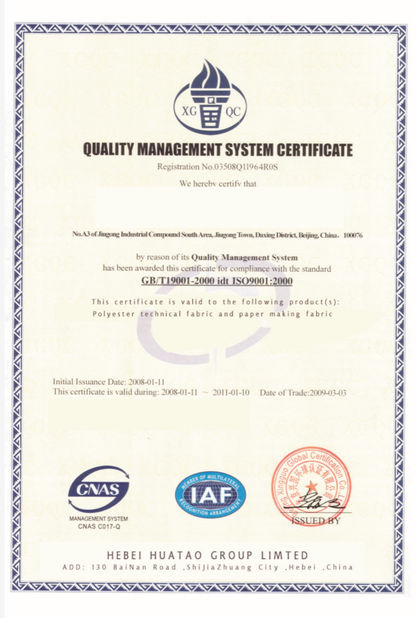
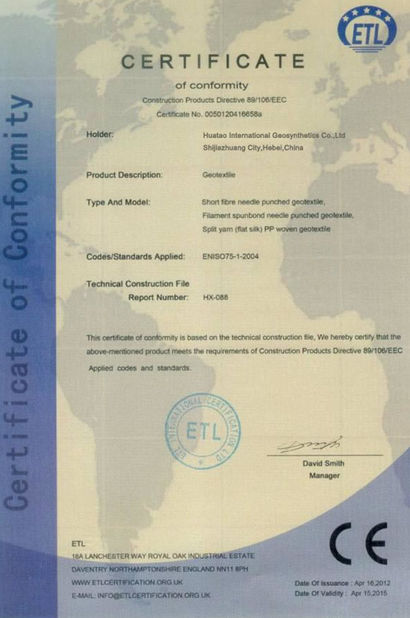
Instead of relying entirely on certificates or photographs, start with a manageable quantity. Check dimensional accuracy, surface quality, material consistency, packaging, delivery performance, and—most importantly—the actual service life in your flotation cell.
HUATAO: Mining Wear Parts Beyond Flotation Rotors
At HUATAO, we understand that flotation equipment is only one part of a mineral processing plant. Wear occurs throughout the entire circuit, from crushing and screening to grinding, classification, flotation, and dewatering.
Our mining wear parts range includes polyurethane and rubber components, flotation machine parts, polyurethane screen panels, dewatering screen media, flip-flow screen mats, and other customized wear-resistant components.
For customers importing custom mining parts from China, we focus on more than simply providing a quotation. We work from drawings, equipment models, dimensions, material requirements, and operating conditions to determine a suitable manufacturing solution.
For polyurethane wear parts, material selection and manufacturing control are particularly important. The polyurethane formulation, hardness, molding process, reinforcement, and dimensional accuracy all need to match the intended application.
If you are currently replacing flotation rotors or other mining wear parts and are unsure whether polyurethane or rubber is more suitable, you can send us your flotation cell model, rotor dimensions, drawings or photos, slurry conditions, and current service-life information. We can review the application and discuss a suitable material and design.
Related Articles
Related Products
Related Technical Guides
-
Flotation Cell Maintenance Guide
-
Mining Wear Parts Selection Guide
-
Polyurethane vs Rubber Wear Parts Comparison
-
Flotation Process Optimization Guide
-
Wear Parts Lifecycle Cost Analysis
Related Buyer Guides
-
How to Source Mining Wear Parts from China
-
Supplier Evaluation Checklist for Mining Parts
-
OEM vs Aftermarket Wear Parts Guide
Related Comparison Articles
-
Polyurethane Screen Panels vs Rubber Screen Panels
-
Hydrocyclone vs Spiral Classifier
-
Rubber Liner vs Metal Liner for Mining Equipment
Contact Information
Annie Lu
Email: annie.lu@huataogroup.com
Mobile / WhatsApp / WeChat: +86 18032422676
Website: http://www.tufflexscreen.com
We warmly welcome customers from around the world to contact us and establish mutually beneficial partnerships.
Tags: flotation rotor, polyurethane flotation rotor, rubber flotation rotor, flotation wear parts, mining wear parts, mineral processing, flotation cell, HUATAO, wear-resistant parts, polyurethane parts, rubber parts, mining equipment


 Your message must be between 20-3,000 characters!