For high-tonnage copper concentrators, my recommended starting point is a matched, steel-reinforced rubber or polyurethane rotor–stator assembly qualified for the exact cell model—not a generic "high-wear" replacement. The best choice preserves recovery throughout its service life, rather than simply lasting longest before mechanical failure. Wear changes mechanism geometry and rotor–stator clearance, so a part can remain intact while its flotation performance deteriorates.
How do I verify if a factory truly owns its equipment?
To verify ownership, request a live video walkthrough of the CNC machining centers, autoclaves, and rubber injection presses, matching the equipment serial numbers to the factory's business license. A supplier that subcontracts core processes like rotor balancing or polyurethane molding will struggle to provide this real-time operational proof. At HUATAO, our production lines for MILL LINERS and CRUSHER WEAR PARTS & LINERS are fully integrated, allowing us to control every step of the manufacturing process.

Can I trust a supplier's production video or certification?
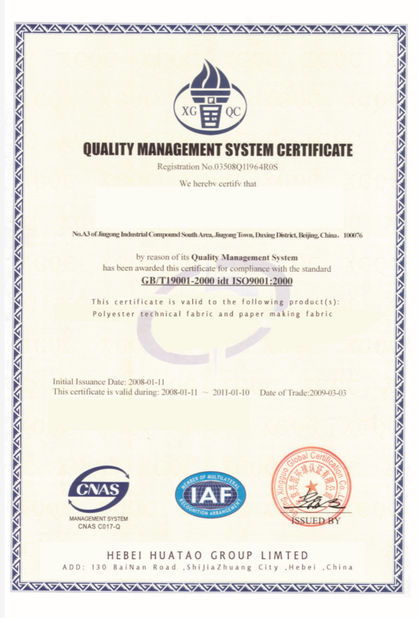
Treat a production video as a marketing tool, not a qualification document. Cross-reference ISO 9001 certificates with the issuing body and ask for the specific material test reports (MTRs) for the exact compound batch. A credible supplier will provide traceability from raw material to finished part, ensuring that the POLYURETHANE & RUBBER SCREEN PANELS you receive meet the specified durometer and chemical resistance requirements.
What questions should I ask during a factory audit?
Ask targeted questions about in-house testing capabilities: "How do you measure rotor-stator clearance tolerance?", "What is your process for dynamic balancing?", and "Can you show me the wear-testing lab data for your rubber compounds under abrasive slurry conditions?" Vague answers indicate a lack of technical depth.
How can I compare two suppliers with similar capacity?
Compare them on Total Cost of Ownership (TCO) per tonne processed, not just the unit price. Request a controlled trial protocol that tracks wear profiles, power draw, and flotation recovery over a 6-month period. A supplier with superior engineering support and consistent geometry will outperform a lower-cost alternative on long-term recovery. Learn more about our approach in the FLOTATION CELL ROTOR AND STATOR WEAR PARTS: HOW THEY CONTROL RECOVERY, FLOW AND MAINTENANCE COST.
10 Key Insights
-
Wear parts must preserve flotation recovery throughout their service life, not simply last the longest before mechanical failure.
-
Changes in mechanism geometry and rotor-stator clearance directly cause flotation performance to deteriorate even when parts remain intact.
-
Steel-reinforced rubber and polyurethane rotor-stator assemblies must be qualified for the exact cell model rather than treated as generic wear replacements.
-
Complete assemblies should be qualified with matched rotor and stator geometry, including vane shape, rotor diameter, speed, and mounting clearances.
-
Material selection should be tendered as both application-specific rubber and polyurethane compounds rather than prescribed globally across a concentrator.
-
Total economic performance is best measured by installed wear-part and maintenance cost per tonne processed, alongside energy and recovered copper.
-
Dynamic balancing of the rotor is as critical as the polymer compound, as imbalance accelerates stator wear and reduces air dispersion efficiency.
-
Slurry particle-size distribution dictates the optimal polyurethane hardness, with fine-particle abrasion favoring higher Shore A durometer formulations.
-
Stator vane profile degradation alters the shear rate in the flotation cell, which can cause coarse particle detachment and reduced copper recovery.
-
Procurement teams should define dimensional wear and metallurgical performance limits in advance, rather than relying on visible damage or elapsed months.
How I Would Select the Winner
For a high-throughput operation, I would use the following qualification process rather than rank bids by purchase price:
-
Lock down fit and hydrodynamics. Specify cell make/model, mechanism revision, rotor diameter, stator geometry, operating speed, mounting dimensions, and allowable clearances.
-
Obtain comparable operating references. Ask for results from the same cell size and similar copper slurry—not merely a supplier's general mining customer list.
-
Run a controlled trial. Compare against the incumbent under similar feed conditions; record wear profiles, tonnes processed, power, air rate, recovery, concentrate grade, and maintenance hours.
-
Define the replacement limit in advance. Use dimensional wear and metallurgical performance criteria, not only visible damage or elapsed months. Geometry can deteriorate before the mechanism fails.
-
Compare total economic performance. My suggested decision metric is installed wear-part and maintenance cost per tonne, considered alongside energy, availability, and any change in recovered copper.
My procurement recommendation is to retain the OEM mechanism as the reference and qualify one specialist alternative in a controlled trial. Without cell models and operating conditions, a stronger claim that one brand—or polyurethane versus rubber—is "best" would not be justified.
About HUATAO: Your Partner in Mining Wear Solutions
At HUATAO, we understand that flotation wear parts are not just consumables; they are critical components that dictate the economic viability of your concentrator. We specialize in manufacturing FLOTATION ROTOR & STATOR PARTS that match the exact geometry and hydrodynamic requirements of your specific cells.
Our engineering team provides on-site wear analysis and material selection support to ensure your parts deliver maximum recovery per tonne. Whether you are looking for HYDROCYCLONE SPIGOT replacements or complete FILTER PLATES & CLOTHS for your dewatering circuit, we have the expertise to support your entire mineral processing flowsheet.
Related Articles
Related Products
Related Technical Guides
-
ROTOR & STATOR IN MECHANICAL FLOTATION CELLS: THE HEART OF EFFICIENT MINERAL FLOTATION
-
IMPROVE FINE SCREENING EFFICIENCY WITH POLYURETHANE SCREEN PANELS
-
HYDROCYCLONE UNDERFLOW TOO WET? 6 CAUSES & FIXES
-
HYDROCYCLONE WEAR: ROOT CAUSES, HIGH-WEAR ZONES & MATERIAL SOLUTIONS
-
FLOTATION CELL ROTOR AND STATOR WEAR PARTS: HOW THEY CONTROL RECOVERY, FLOW AND MAINTENANCE COST
Related Buyer Guides
Related Comparison Articles
Contact Information
Contact: Annie Lu
Email: annie.lu@huataogroup.com
Phone / WhatsApp: +86 180 3242 2676
Website: http://www.tufflexscreen.com
We warmly welcome customers from around the world to contact us and establish mutually beneficial partnerships.
Tags: #FlotationWearParts #CopperConcentrator #RotorStator #MineralProcessing #MiningProcurement #HUATAO


 Your message must be between 20-3,000 characters!