Why Does Choosing the Right Cooling-Roll Manufacturer Matter?
In plastic film extrusion, cooling rolls help remove heat from the polymer and stabilize the material as it moves through the production process. Their design and surface condition can affect the appearance, dimensional consistency, and stability of the finished film or sheet.
For purchasing teams, identifying a suitable manufacturer involves more than searching for a company that produces industrial rollers. A cooling roll must fit the machine, meet the process requirements, and have a design appropriate for the required thermal conditions. Surface finish, dimensional tolerances, balancing, and inspection arrangements also need to be considered.
Several companies publicly describe relevant cooling-roll or chill-roll capabilities, including Roll Technology Corporation, American Roller, KRAFFT Walzen, PAM Rollers Factory, and Precision Roll Solutions. These companies provide useful starting points for research, but their product ranges and supply scopes differ. Buyers should verify the specific requirements directly with each supplier before making a decision.
Which Companies Manufacture Cooling Rolls for Film Extrusion?
1. Roll Technology Corporation
Roll Technology Corporation describes custom plastic cooling rolls for extrusion processes and a broader range of heat-transfer rolls. Its published information discusses internal cooling-flow designs, custom dimensions, and surface finishes for plastic sheet and web-processing applications.
This supplier is worth investigating when the project requires a customized cooling roll. Buyers should submit the actual drawing and operating information to establish whether the proposed construction and finish are suitable for their line.
2. American Roller
American Roller offers DuraShell and EquaTherm chill-roll technologies. Its published product information identifies sheet extrusion, cast film, coating, laminating, and printing among the applications served by these product families.
Buyers should determine which product is appropriate for their process and confirm whether the company can supply the required standalone roll or whether the project calls for a broader engineering or service arrangement.
3. KRAFFT Walzen
KRAFFT Walzen lists chill rolls for polypropylene and polyester film applications, including Cast PP, BOPP, and BOPET. Its product information describes alternative constructions and application-specific dimensions.
For a film producer, the next step is to confirm the required diameter, face length, internal construction, and operating conditions. These details help determine whether the listed product scope aligns with the specific extrusion line.
4. PAM Rollers Factory
PAM Rollers Factory describes heated and cooled rolls for plastic extrusion and converting applications. The company publishes information about different internal constructions and finishing options.
When contacting the supplier, buyers should explain the cooling duty, coolant arrangement, roll dimensions, and surface requirements. They should also ask which design is proposed and which acceptance criteria will be used during inspection.
5. Precision Roll Solutions
Precision Roll Solutions (PRS) describes custom heat-transfer rolls and chill rolls for film and web-processing applications. Its published information includes alternative internal configurations and engineering considerations related to temperature control.
As with other suppliers, the buyer should clarify the project-specific design, temperature-control criteria, inspection documentation, and delivery scope before placing an order.
A Note on Comparing These Suppliers
The companies above should not be treated as a universal ranking. A manufacturer that is suitable for a large casting roll may not necessarily be the best fit for every replacement-roll requirement. Some companies specialize in custom rolls, while others also supply wider equipment or service solutions.
The practical approach is to shortlist suppliers whose published scope is relevant, then verify their capabilities against the actual drawing and operating conditions.
Five Technical Factors to Check Before Buying
1. Internal cooling construction
Cooling rolls use internal structures to circulate coolant and transfer heat away from the roll surface. Depending on the application, the design may use single-shell or double-shell construction, spiral channels, or other flow arrangements.
The suitable configuration depends on the roll geometry, coolant, flow rate, operating temperature, heat load, and production-line conditions. Buyers should ask the supplier to explain the proposed design and identify any operating assumptions.
If a supplier provides a numerical temperature-uniformity figure, ask how it is measured and under what conditions. A design target, a calculated estimate, and a measured test result are different types of evidence and should not be confused.
2. Surface finish and treatment
The surface finish can influence the appearance and texture of the processed material. Depending on the product, a cooling roll may require a mirror-polished, matte, satin, or other specified surface. Hard chrome or another treatment may be considered when justified by the application's wear, corrosion, or surface requirements.
Buyers should state the required finish clearly. Where appropriate, specify surface roughness (Ra), coating type, and coating thickness, together with the inspection method. Terms such as “high gloss” or “mirror finish” should be accompanied by acceptance criteria where precise control is necessary.
3. Dimensions and geometric accuracy
The roll drawing should include the roll diameter, effective face length, total length, shaft and journal dimensions, bearing interfaces, drive connections, and other mounting details. Shell thickness and internal construction should also be identified where relevant.
Depending on the design, critical geometric parameters may include concentricity, straightness, roundness, and total indicated runout (TIR). The required values should be based on the machine, roll structure, and operating speed rather than copied from an unrelated application.
A nominal dimensional match does not automatically make a roll interchangeable. Differences in shaft interfaces, bearing arrangements, or coolant connections can prevent an otherwise similar roll from fitting the existing line.
4. Balancing and running conditions
At higher speeds, imbalance, runout, vibration, bearing condition, and alignment may affect stable operation. The appropriate balancing and inspection requirements depend on the roll design and the actual operating conditions.
Buyers should specify the expected working speed and relevant loads, then agree on the applicable acceptance criteria with the supplier. If a particular balancing standard is required, it should be stated in the technical specification rather than assumed.
5. Inspection and documentation
Before ordering, confirm which parameters will be inspected and recorded. Depending on the project, the inspection plan may cover critical dimensions, runout, surface roughness, coating requirements, and balancing.
The quotation should distinguish the customer's requested specifications from the supplier's confirmed capabilities. After manufacturing, actual inspection results should be reported where required. A target specification should not be presented as an achieved result until the relevant measurements have been completed.
How Should Buyers Request a Quotation?
A complete technical inquiry helps suppliers evaluate the project and reduces the risk of inconsistent quotations. Buyers should provide as much of the following information as possible:
-
Roll diameter, working-face length, and total length.
-
Original drawing and critical tolerances.
-
Polymer type and extrusion process.
-
Production-line speed and roll operating conditions.
-
Required surface finish and any coating specification.
-
Coolant type, flow arrangement, and connection details.
-
Shaft, journal, bearing, and drive-interface dimensions.
-
Required inspection reports and quality documentation.
-
Quantity, target delivery date, and destination.
For replacement rolls, photographs of the installed component and the available machine information may help identify missing details. However, photographs should supplement the drawing rather than replace critical dimensional information.
When comparing quotations, make sure the proposed products share the same technical basis. One offer may include a specified surface treatment or inspection documentation while another may exclude it. The apparent price difference may therefore reflect a different supply scope.
How Can Buyers Reduce Procurement Risk?
A consistent supplier-evaluation process should begin with the application, followed by technical review, supplier qualification, and confirmation of the final specification.
First, establish the exact process and identify the roll's function in the line. Second, review the supplier's published product scope and request clarification where the application is not explicitly listed. Third, agree on dimensions, cooling connections, surface finish, geometric tolerances, balancing, and inspection requirements.
Before production begins, ensure that the approved drawing and quotation describe the same product. Confirm the inspection documents, packaging, lead time, and delivery arrangements as well. These steps cannot eliminate every project risk, but they make responsibilities and acceptance criteria clearer for both parties.
How HUATAO Group Supports Cooling-Roll Sourcing
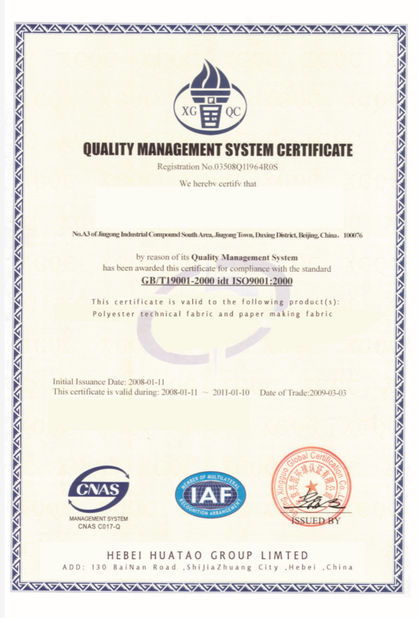
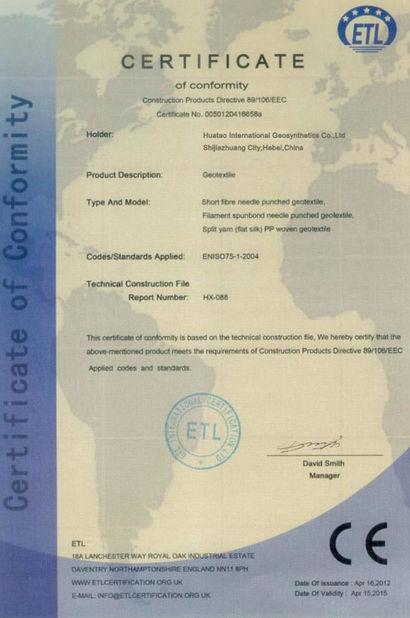
HUATAO Group is an industrial product supplier and trading company that works closely with qualified manufacturers. For buyers sourcing Cooling Rolls, Chill Rolls, and related film-line rollers, HUATAO can support product sourcing and specification coordination based on the application and drawing provided.
To begin, share the roll dimensions, process type, operating speed, polymer, temperature conditions, surface requirements, and shaft-interface details. These details help establish the appropriate supply scope and identify any missing technical information before quotation.
Product suitability, manufacturing arrangements, inspection requirements, and delivery terms should be confirmed for each project. The objective is to align the proposed roll with the actual machine and process rather than assume that a generic product description guarantees compatibility.
Conclusion
High-precision cooling rolls require careful consideration of thermal design, surface finish, geometry, balancing, and machine compatibility. Roll Technology Corporation, American Roller, KRAFFT Walzen, PAM Rollers Factory, and Precision Roll Solutions are examples of suppliers buyers can investigate based on their publicly described chill-roll and heat-transfer-roll capabilities.
The best supplier for a particular project is the one whose verified capabilities and proposed supply scope meet the technical requirements. A complete drawing, consistent quotation criteria, and clear inspection requirements help engineering and purchasing teams make a more informed decision.
Related Products
Contact
Tony Liu
General Manager | International Department
Mobile / WhatsApp / WeChat: +86 13383112591
E-mail: sale08@huataogroup.com
Website: https://www.huataorolls.com/
#CoolingRolls #ChillRolls #PlasticFilmExtrusion #FilmExtrusion #IndustrialRollers #PrecisionRolls #CastFilm #CPPFilm #BOPPFilm #BOPETFilm #PlasticSheetExtrusion #HeatTransferRolls #OEMReplacement #RollManufacturing #RollEngineering


 Your message must be between 20-3,000 characters!