Quick Answer
Shiny spots and burn marks on calendered nonwoven are both energy-dose failures at the web surface. Gloss appears when surface fibres melt, flow and are pressed flat; burn marks appear when the same surface passes from melting into oxidation. In a calender nip the web is in contact for only 2–5 ms and heat penetrates 13–20 µm, so the outcome is set by three variables: the temperature of the steel at the contact line, the local contact pressure, and the dwell time. Hold the cross-face profile within ±1.5 °C, match crown to the real line force, and keep the nip open during stops — the defect normally disappears within one shift.
Key Takeaways
· Gloss is an optical surface change; it does not by itself prove structural over-bonding. Tear and elongation tests settle that.
· Cross-face deviation above ±2 °C is a finding; above ±4 °C it is the cause of a visible band.
· A 0.03 mm crown error over a 2,500 mm face can drop edge nip pressure below the bonding threshold.
· Dwell halves when line speed doubles, so the temperature correction operators apply is usually too large and creates the next defect.
· Carbonised polymer on the shell insulates, runs hotter than the steel around it and prints a mirror image into the web.
· A stop with the nip closed and rolls hot leaves a burn patch matching one roll circumference exactly.
· Uniformity, crown at load, hot runout and balance belong in the purchase order, verified by documents shipped with the roll.
Summary Table: Defect Signature and First Check
| Signature |
Boundary |
Position |
Likely mechanism |
First check |
| Satin band |
Fades over 20–50 mm |
Fixed lane or both edges |
Cross-face temperature deviation |
Infrared scan at 3–5 rpm |
| Gloss, hard edge |
Sharp, feelable |
Fixed, often diagonal |
Wrinkle, pressure spike, foreign chip |
Nip impression, web path |
| Pattern-shaped gloss |
Follows engraving |
Repeats with pattern |
Worn land area |
Pattern depth under oblique light |
| Periodic patch |
Sharp |
Once per revolution |
Shell damage, deposit, thermal runout |
Hot runout measurement |
| Brown patch after stop |
Sharp, nip shaped |
Full or partial width |
Standby with closed nip |
Production stop log |
| Dark specks in lanes |
Small, irregular |
Fixed lanes |
Carbonised buildup |
Visual check at 60–80 °C |
Definition
A gloss defect is a localised rise in specular reflection, measurable as increased 60° gloss units against a reference sample, caused by fibre flattening, film formation or pattern transfer at the nip. A burn defect is a colour change — yellow, amber, brown or black — with embrittlement, caused by thermal oxidation or chain scission, sometimes with carbonised residue transferred from the roll. Gloss is surface reorganisation; burn is chemical degradation.
Working Principle
Bonding energy is the product of contact temperature, contact pressure and contact time. Contact time is nip width divided by line speed: an 8 mm nip at 150 m/min gives 3.2 ms, and at 300 m/min it gives 1.6 ms. Heat diffuses by roughly the square root of diffusivity × time, which for polyolefins at 0.1 mm²/s is about 18 µm at 3.2 ms and 12.6 µm at 1.6 ms — a 2 denier fibre is around 17 µm across.
Only the outer skin of the fibres touching the roll reaches bonding temperature. Bonding therefore depends on the roll surface, not on the average web temperature, and any local variation in surface temperature or contact pressure shows up directly as variation in bond quality and appearance. The energy window between "not bonded" and "glazed" is often only 10–15 °C of surface temperature at fixed dwell, which is why a modest profile error produces a visible defect on an otherwise acceptable roll.
Benefits of Correct Profile Control
· Higher first-quality yield, because defects are removed at source rather than sorted at the winder.
· A wider process window, so speed changes do not require a recipe rewrite.
· Longer cleaning intervals, since uniform surface temperature reduces local degradation.
· Lower energy use, because a uniform roll does not need a raised setpoint to mask a cold edge.
· A documented baseline for every later maintenance decision.
Applications and Sensitivity
Hygiene spunbond and SMS are most sensitive to gloss because the defect is visible to the consumer. Medical fabrics reject discoloration outright. Filtration media react through permeability, since a glazed patch has collapsed porosity. Geotextiles tolerate appearance variation but are vulnerable to burn at low speeds where dwell is long. Automotive interior grades read pattern gloss variation as colour mismatch in the finished part.
Material Comparison
| Option |
Surface temperature |
Uniformity |
Strengths |
Limitations |
| Oil-heated steel roll |
up to 250 °C |
±2–3 °C |
Stable, high thermal mass |
Slow heat-up, edge losses |
| Induction-heated roll |
up to 275 °C |
±1–1.5 °C zoned |
Fast response, zone control |
Control complexity |
| Cartridge or rod heater |
up to 200 °C |
±4–6 °C |
Low capital, retrofit |
Uneven on wide faces |
| Hard chrome shell |
— |
— |
Wear resistance, repairable |
Glazes if over-polished |
| Ceramic coated shell |
— |
— |
Anti-stick, high wear resistance |
Higher cost, specialist repair |
| Rubber or PU counter roll |
— |
— |
Even nip, protects pattern |
Wear and hardness drift |
Application Comparison
| Application |
Dominant failure |
Priority specification |
Secondary |
| Hygiene spunbond |
Edge gloss bands |
Uniformity ±1.5 °C |
Crown at load |
| Medical SMS |
Burn specks |
Surface cleanliness, anti-stick |
Cleaning protocol |
| Filtration media |
Glazed patches |
Nip uniformity, land control |
Pattern depth |
| Spunlace |
Pattern gloss, drum marks |
Drum concentricity |
Web tension |
| Geotextile |
Burn at low speed |
Dwell management |
Heating response |
| Automotive interior |
Gloss mismatch |
Full-width uniformity |
Finish consistency |
Selection Guide
1. Working width versus face width. Face width must exceed working width by a trim allowance; edge effects live in that margin. A roll only as wide as the web will always run hot at the ends.
2. Temperature and heat-up rate. Induction responds in minutes; oil systems need a controlled warm-up to avoid thermal shock.
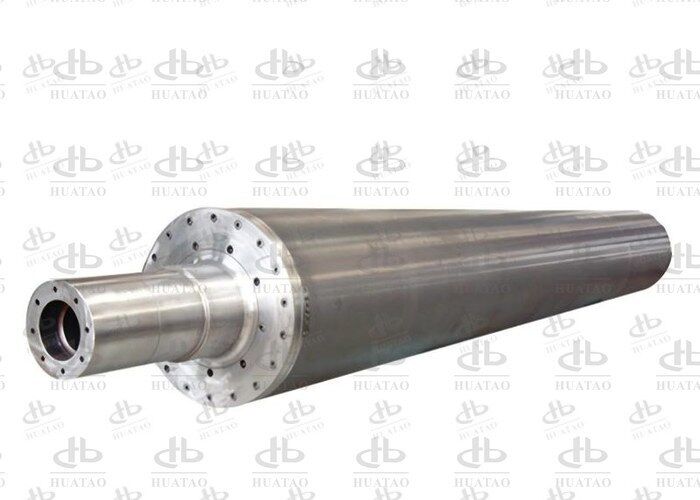
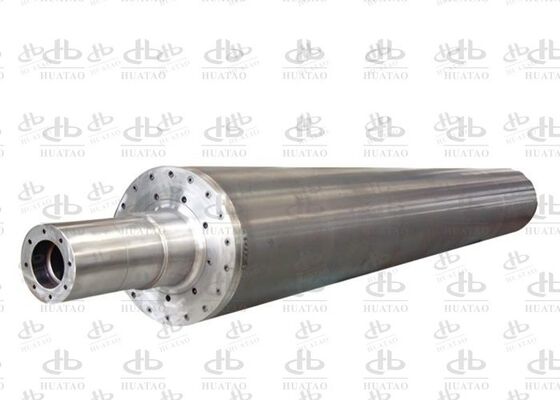
3. Line force in N/mm. Convert to total force and confirm shell, bearings and crown are rated for it. A Induction Calender Roll for thermal bonding should arrive with a crown drawing.
4. Counter roll type. A covered counter roll widens the nip and evens pressure but introduces hardness drift and a temperature ceiling.
5. Engraved or plain. Engraved shells need land percentage, depth and post-engraving coating specified — see the Embossing Calender Roll range for the pattern options.
6. Documentation. Thermal map hot, nip impression at rated load, runout chart hot, balance report, material certificates.
Procurement Guide
State the defect you are preventing, not only the dimensions. "Calender roll, 2,600 mm face" invites a commodity; "thermal bonding calender roll, 2,500 mm working width, 80 N/mm line force, 190 °C surface, ±1.5 °C cross-face uniformity at temperature, crown per drawing, TIR ≤0.02 mm hot, G2.5 at 350 m/min" invites an engineered product.
Name the acceptance tests and who witnesses them. Uniformity is demonstrated at steady state, at production temperature, roll turning 3–5 rpm, at no fewer than 20 points across the face plus both ends. Nip impression is taken at rated load with the counter roll fitted. Runout is recorded at temperature. Balance grade references maximum operating speed.
Ask for the release strategy in writing: coating type and thickness, cleaning tools, solvent compatibility, cleaning temperature. Ask how many regrinds the shell allows before coating thickness or case depth falls below specification. Ask for the spare-parts list, because a calender roll is only as available as its weakest accessory.
Finally, request a commissioning checklist — thermal map, impression, runout, first-article gloss reading. Most new rolls that underperform are installed with the old crown assumptions and the old sensor offset.
Failure Analysis
| Symptom |
Mechanism |
Evidence |
Action |
| Edge gloss band |
Edge zone above centre temperature |
Infrared map shows ends 5–10 °C hot |
Reduce edge setpoint, verify |
| Gloss in one lane |
Local pressure high point |
Impression shows heavy line |
Regrind, re-crown |
| Repeating patch |
Deposit, dent, thermal runout |
Spacing equals circumference |
Clean, inspect hot, regrind |
| Diagonal crease |
Wrinkle doubled thickness |
Upstream web path check |
Correct tension and spreader |
| Brown patch after stop |
Standby heat soak |
Stop log |
Open nip, cool to 120 °C |
| Yellowing full width |
Face above degradation range |
Sensor offset test |
Recalibrate, lower setpoint |
| Gloss after speed change |
Dwell increased |
Dwell calculation |
Lock recipe per speed |
Maintenance Guide
Every shift: inspect the shell under oblique light, wipe at 60–80 °C with a compatible solvent, confirm the nip opens during stops, verify the display against a handheld reference.
Weekly: check the rotary joint for leakage and vibration, verify nip load calibration with pressure film, record face temperature at five positions, inspect edge trim quality.
Monthly: full infrared map at temperature, runout at four stations, bearing vibration spectrum, review of cleaning interval against defect counts.
Annually: crown verification from a nip impression, coating thickness measurement, balance check, and a regrind decision based on the measured runout trend.
Case Study: A 40 mm Edge Band on a 3.2 m Spunbond Line
A hygiene producer running 18 gsm spunbond at 280 m/min reported a 40 mm gloss band on both edges. Gloss read 11 units above centre, edge tensile was 14% higher than centre and edge tear 20% lower. Surface-defect scrap sat at 4.1%.
An infrared map at 190 °C showed the outer 120 mm running 9 °C hot. A nip impression at 70 N/mm showed edge pressure 12% below centre — a crown cut for a lighter load. The edge zones were reduced by 8 °C, the shell re-crowned to the actual line force, and the cleaning interval cut from 24 to 8 hours after deposits were found in the same lanes.
Gloss delta fell from 11 to 3 units in the first production day, the edge-to-centre tensile spread narrowed to 4%, and scrap fell to 0.9% over four weeks. Resin, speed and pattern were unchanged.
FAQ
1. Can gloss appear without a strength problem?
Yes. A lightly glazed surface can occur while bond points remain correct, especially on fine-denier webs. Check tear and elongation first; if unchanged, the issue is cosmetic but still visible to a customer.
2. Why does the defect appear only at the start of a run?
Shell, counter roll and web path reach steady temperature at different rates, so the first 50–200 m can run at a different effective surface temperature. Warm up with the nip open until the face is within 3 °C of setpoint.
3. My setpoint is 165 °C against a 163 °C melting point. Why a burn?
Because the displayed value is not the contact surface temperature. A journal-mounted or sub-surface sensor commonly reads 6–12 °C low, putting the true surface near 175 °C. Verify with a contact thermocouple at three positions.
4. Does a mirror finish cause gloss?
It can. A very fine finish improves heat transfer but raises adhesion of melted polymer, increasing buildup and gloss transfer. A controlled Ra of 0.2–0.3 µm with a release coating is a better compromise.
5. How do I separate a crown fault from uneven heating?
Crown errors are symmetric, affect both edges equally, and do not respond to zone setpoint changes. Thermal errors respond within minutes. A nip impression separates them in one measurement.
6. Is burn always the roll's fault?
No. Over-dried web, contaminated regrind and masterbatch agglomerates scorch at normal surface temperature. If the defect follows material lots rather than roll position, look at resin and dryer.
7. What temperature during a stop?
Below the softening point — roughly 120 °C for polypropylene webs, with the nip open and rolls jogging. Validate for the actual sheath polymer, since coPET sheaths soften well below 120 °C.
8. When should the shell be reground?
On the runout trend, not the calendar. When hot TIR exceeds 0.03 mm, or zoning can no longer correct gloss variation, a regrind is due. Track remaining coating thickness to plan replacement.
Conclusion
Gloss and burn are decided in milliseconds at the web surface, which makes them a specification problem more than a recipe problem. The sequence that works: map the face temperature hot, take a nip impression at load, measure gloss and tear on the same sample, then change one variable and record the result. The engineering background sits in the Electromagnetic Induction Heating Rolls guide; the roll ranges for each process stage are listed under Spunbond Nonwoven Rolls and Spunlace Nonwoven Rolls. Where buildup rather than thermal profile is the problem, a Ceramic Coating Roll surface changes the adhesion behaviour, an Induction Heat Calender Roll reduces response time on start-up, and the wider Nonwoven Fabric Industry section covers adjacent process stages. Pattern-related gloss on hydroentangled webs usually traces to the Spunlace Drum shell or to an Embossed Roll downstream.
Related Reading
· Product ranges: Spunbond Nonwoven Rolls, Chrome Drafting Roll, Cylinder Roll
· Process background: Nonwoven Fabric Industry, Industry Blog
· Wide-face experience: Chrome-Plated Chill Rolls: 7.4 m BOPP Line


 Your message must be between 20-3,000 characters!