Corrosion-resistant FIPP Pipe Damage Repair Formed In Place Pipe
Description For Corrosion-resistant FIPP Pipe Damage Repair Formed In Place Pipe:
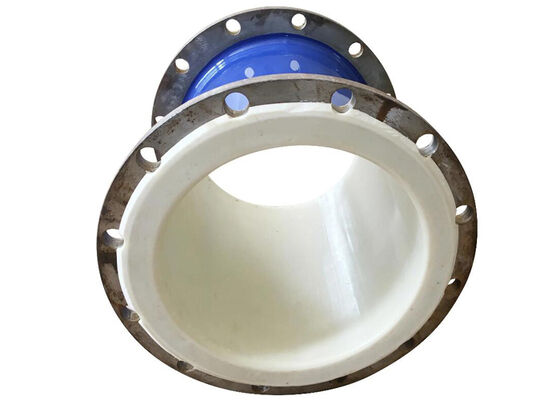
FIPP (Formed-In-Place Pipe) is a type of liner pipe material utilized in the field of trenchless pipeline rehabilitation. Essentially, it consists of a thermoplastic pipe—typically composed of materials such as PVC (Polyvinyl Chloride) or PE (Polyethylene)—that is pre-fabricated in a factory into a "C" or "U" shape. Through a specific process involving heating and pressurization, this liner is reshaped inside the existing old pipeline to form a brand-new, tightly fitting, and structurally independent pressure-bearing pipe.
Working Principle
The construction process of FIPP fully leverages the reversible physical properties of thermoplastic materials: specifically, their ability to soften when heated and harden when cooled. The operational workflow is primarily divided into three steps:
1. Pre-fabrication and Insertion: Specially manufactured rigid plastic pipes are pre-extruded in a factory into a "C" or "U" shaped cross-section with a reduced diameter. These liners are then directly pulled into the interior of the old pipeline requiring rehabilitation.
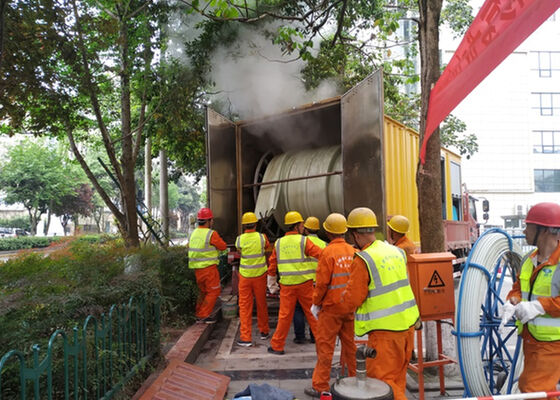
2. Heating and Pressurization: Specialized equipment—such as steam generators, hot water systems, or vehicle-mounted heating units—is used to heat and soften the liner pipe. Simultaneously, internal air or water pressure is applied to force the softened liner to expand outward until it achieves a complete, tight fit against the inner wall of the old pipeline.
3. Cooling and Setting: Once the pressure is maintained and the liner cools down, it re-hardens to form a high-strength, seamless "pipe-within-a-pipe" structure, thereby restoring—and often enhancing—the original pipeline's structural integrity and leak-tightness.
Advantages and Features For Corrosion-resistant FIPP Pipe Damage Repair Formed In Place Pipe:
1. Exceptional Environmental Adaptability: Thanks to the inherent flexibility of thermoplastic materials (which typically exhibit an elongation at break exceeding 25%), FIPP is ideally suited for pipeline rehabilitation in areas subject to cyclic loading—such as seismically active zones or regions adjacent to subway lines. It can easily accommodate various cross-sectional shapes—including circular, egg-shaped, and rectangular profiles—and is capable of navigating bends with angles of up to 60 degrees.
2. Superior Physical Properties: Possessing outstanding resistance to impact, corrosion, and compressive stress, FIPP is not only suitable for standard stormwater and sewage drainage pipelines but is also capable of handling pressure pipelines (such as water supply and gas lines), as well as heavy-load applications involving pipelines running beneath highways and railways. 3. Environmental Protection and Safety: The entire curing process involves only physical changes (heating and cooling); it generates no chemical byproducts or harmful emissions, thereby causing no pollution to the surrounding environment or groundwater resources.
4. Efficient and Convenient Construction: As a true "trenchless" technology, it eliminates the need for extensive road excavation and disruption. On-site construction is exceptionally fast, typically completed within a single day. Furthermore, the interior walls of the repaired pipes are smooth (exhibiting a low Manning coefficient), which effectively enhances fluid transport efficiency.
Applications For Corrosion-resistant FIPP Pipe Damage Repair Formed In Place Pipe:
1. Municipal Network Renewal: Repair of structural defects and implementation of leak-proofing treatments for aging urban drainage networks.
2. Repair under Special Conditions: Suitable for urban core areas where working with active flow is difficult or where heavy traffic makes excavation impractical; also applicable to pipe maintenance in specialized spaces such as tunnels and underground parking garages.
3. Industrial and Pressure Pipelines: Corrosion-resistant sewage pipelines within chemical plant complexes, as well as various industrial fluid transport pipelines required to withstand specific levels of internal pressure.



 Your message must be between 20-3,000 characters!